

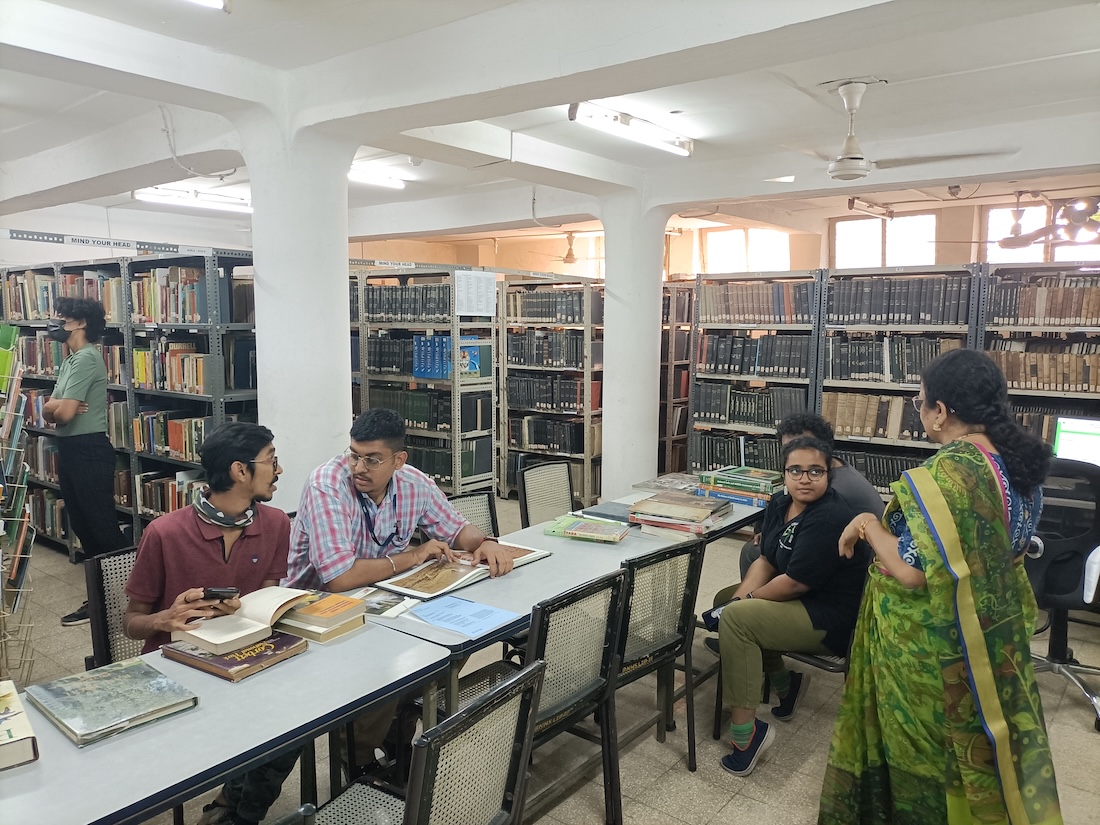
As a millennial, I remember those days when a project was assigned in school and we students would rush to the library to browse through thick encyclopedias. Now, books have been replaced by screens, where all the power lies in a single click of a button. It’s a rare sight to find libraries today, and it was an absolute joy when I discovered that the Bombay Natural History Society has one of the oldest libraries in India dedicated to nature and conservation.
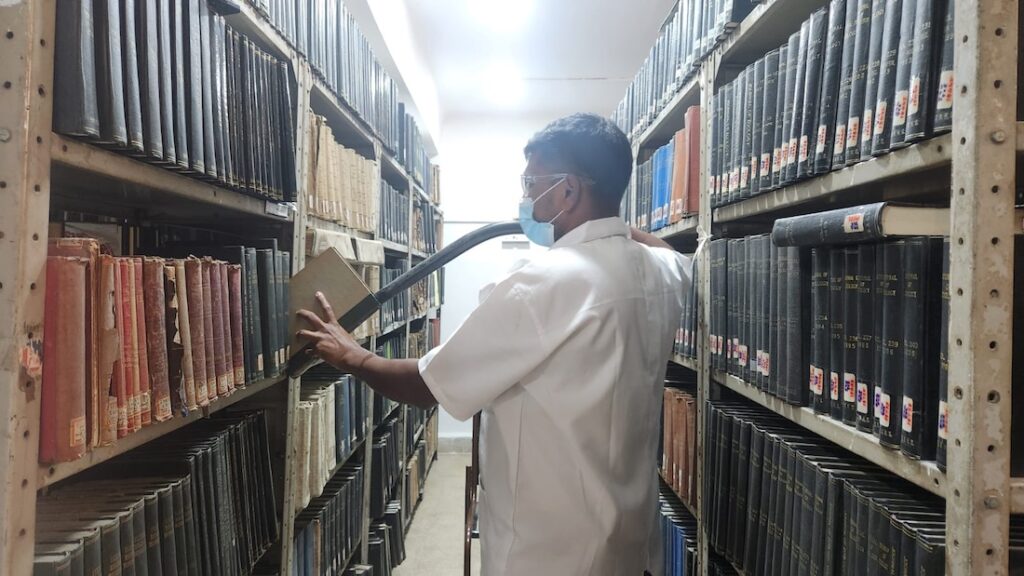
Public libraries have been an integral part of Mumbai. Before the internet’s widespread popularity, readers of all ages enjoyed reading in these libraries. The generation I belong to was born at a time when reading books like Ruskin Bond, Reader’s Digest, and encyclopedias was integral to our growing up, and the internet was in its nascent stage. Many did not have access to the internet, so when it came to research or simply looking for information, most of us, including me, went through the lengthy process of opening every book in a library and browsing through the content to find what we wanted.
Even though it was a long procedure, it was fun, and I truly miss those days. When I started working at BNHS, the first thing that made me nostalgic was finding a library, and when I discovered the amazing titles it had on natural history and conservation, I was even more excited to read them. I must admit that because I had lost the habit of browsing through books and even reading much since 2017, when I completed my college, I wondered if I would be able to make the most of the treasure of knowledge I had discovered.
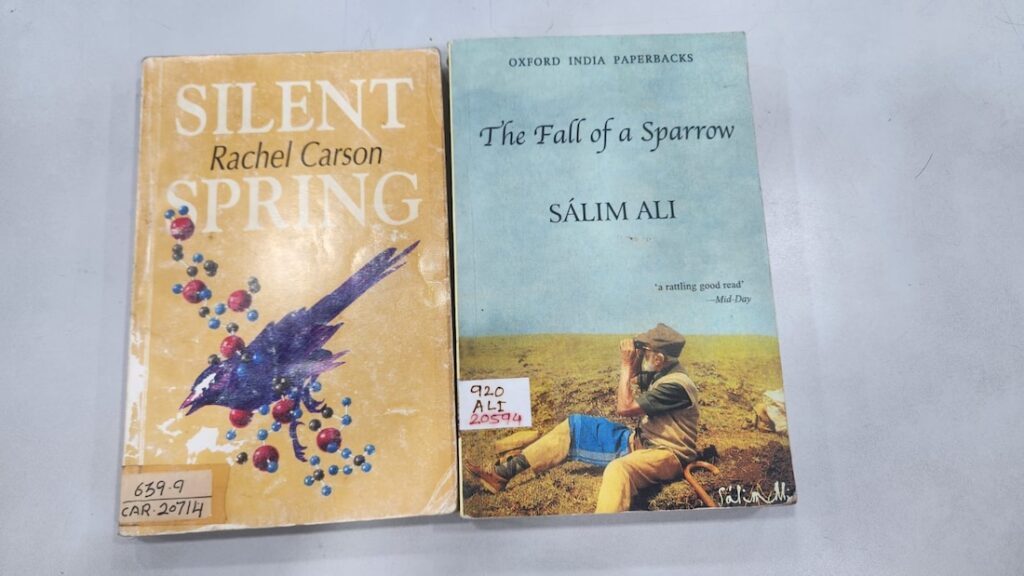
Some of the titles that I picked up were The Fall of a Sparrow by Dr Salim Ali, Silent Spring by Rachel Carson, and The First Eden by David Attenborough. I was amazed by the kind of collection the BNHS library has on natural history. It possesses 25,000 or more books on the subject. From some of the most recent titles to two-century-old ones, the library is home to a variety of books for anyone interested in learning more about subjects like botany, zoology, environment and ecology, ornithology, wildlife, nature conservation, sanctuaries in India, travel, English literature, biographies of some naturalists, and shikar stories.
If somebody is new to the subject and wants to start reading about it, the librarian, Gouri Uchgaonkar, suggests The Book of Indian Birds by Salim Ali, How to Watch Birds by Roger Barton, Trees of Mumbai by Marselin Almeida, Book of Indian Butterflies by BNHS, and Book of Indian Animals by S.H. Prater.
Some of the titles that are popular among readers include Birds of Asia, Birds of the Himalaya Mountains, Views in India, Sketches in Deccan, Denizens of the Jungles, Oriental Memoirs, and Memoirs of the Map of Hindoostan.
I was thrilled to find my favourite author, who is also a children’s author, Ruskin Bond, on one of the shelves. The autobiography of Dr Salim Ali made me fall in love with birding and ornithology. His adventurous trips to Mount Kailash and Afghanistan made me want to read more about these places and their avifauna.
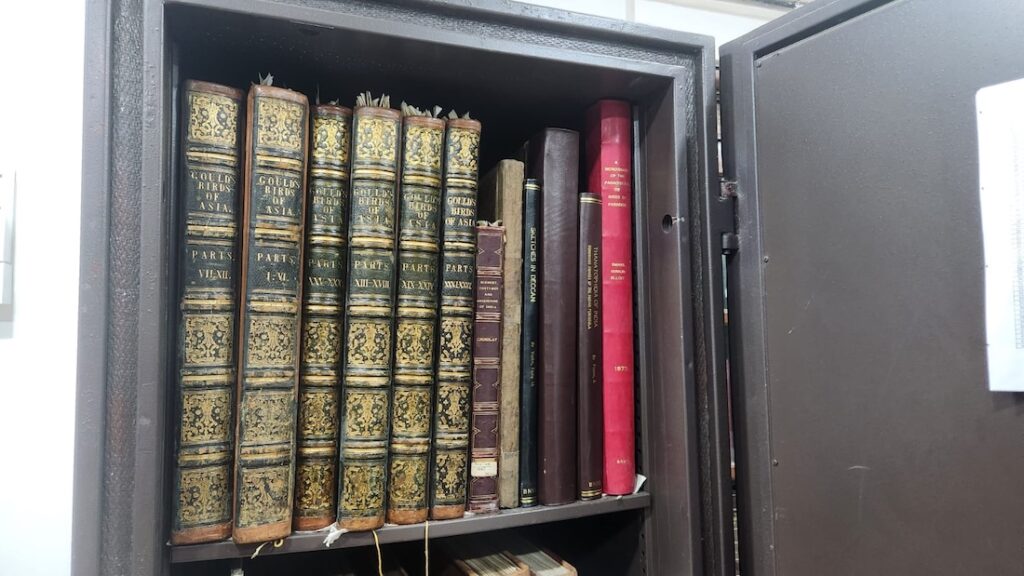
I was surprised to find that the library is also home to some rare books and lithographs, some of which date back to the 19th and 18th centuries. Many of these collections are not available elsewhere. These collections are very rare and are not open to everybody. Just last year, BNHS conducted an exhibition of its rare collections of books and lithographs.
Rome was not built in a day. The people behind this 68-year-old library were its members, some of whom also donated their precious collections to the organisation. These include F.V. Evans, Dr Salim Ali, Angus F. Hutton, and Van Ingen. It also received donated books from esteemed BNHS members, namely Shakuntala and Indru Bhrawani, V.C. Ambedkar, Rivka Israel, and D.S. Variava.
The library is actively developing its institutional archives, which include valuable records such as annual reports, minutes of meetings, Hornbill Special Issues (1933 and 1983), and books and reports published by BNHS. There are valuable photos, negatives, and transparencies, particularly those of E.P. Gee, Loke Wan Tho, R.S.P. Bates, M. Krishnan, and Dr Salim Ali, as well as those generated through various scientific projects of the BNHS.
The personal collection of Dr Salim Ali, India’s pioneering ornithologist, is currently undergoing digitisation. This important archive comprises his films, reprints, field notes, bird notes, letters, press clippings, photographs, slides, and other invaluable materials that document the development of ornithology in India, his efforts in gaining government support for wildlife conservation, and his role in inspiring generations of naturalists.
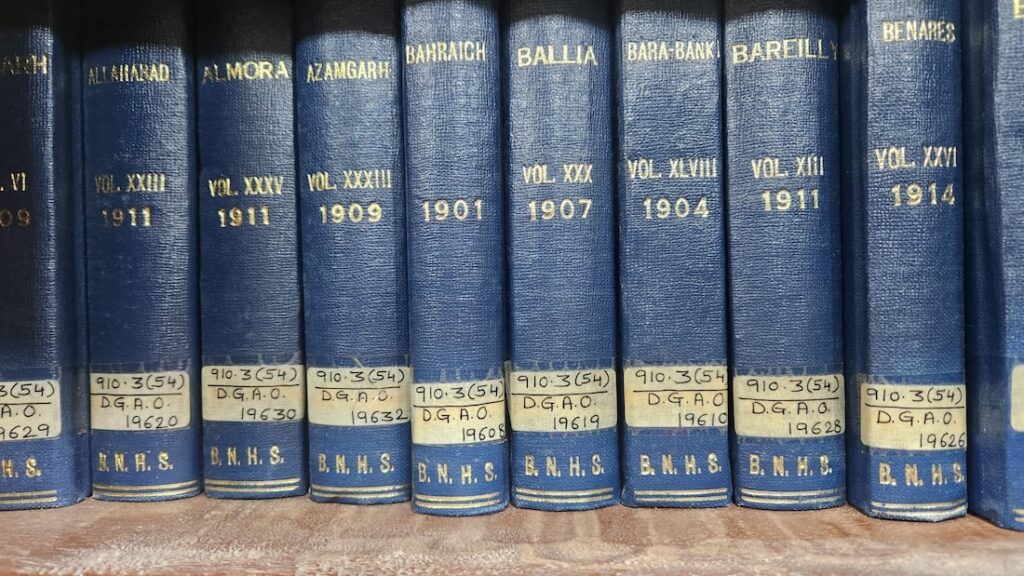
Although the library is no less than Kubera’s treasure for knowledge of natural history and conservation, it has to keep up with the times. To make its collection accessible to all, it has digitised the library. The library’s collection can be browsed online 24/7 through the following link:
https://libopacbnhs.ltsinformatics.com/
Since it’s not possible for me to always access the library during my work hours, I go back to the digitised library of BNHS and browse through the books.
The BNHS Library is open to all who wish to engage in learning and contribute to wildlife conservation through knowledge and research. All BNHS members are automatically enrolled as library users. BNHS is hosting an Open Library Week from February 2 to 6, 2026, where the library will be open to the public to explore its unique collection of books. Some of the rare books will also be on display during this period.