


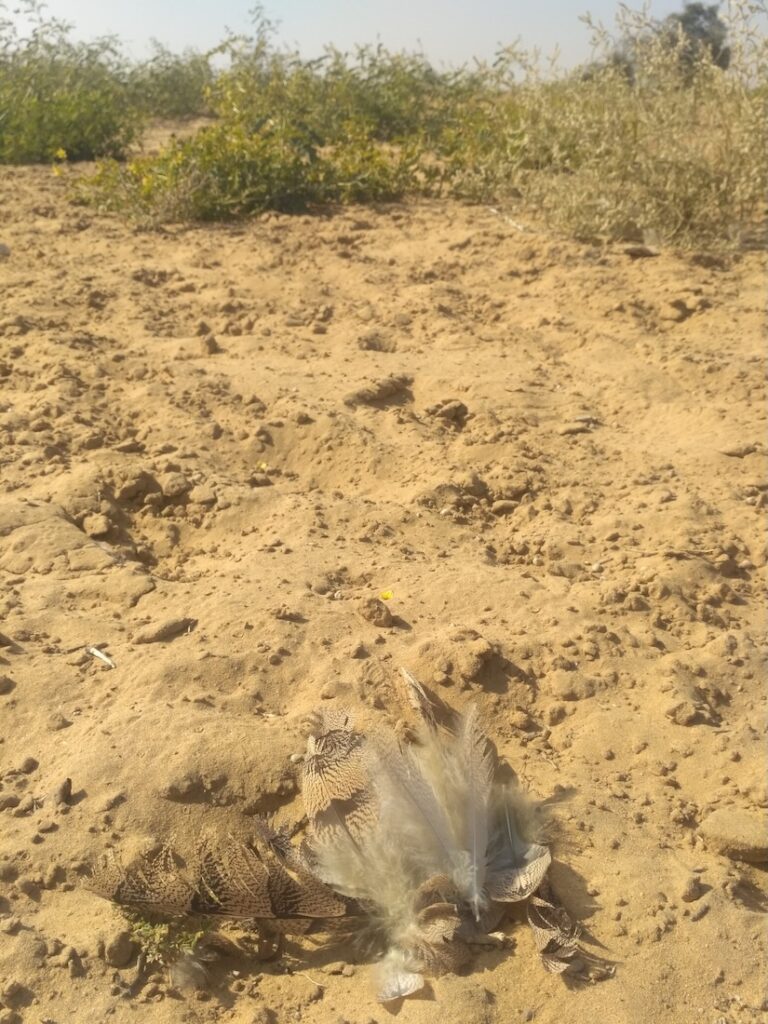
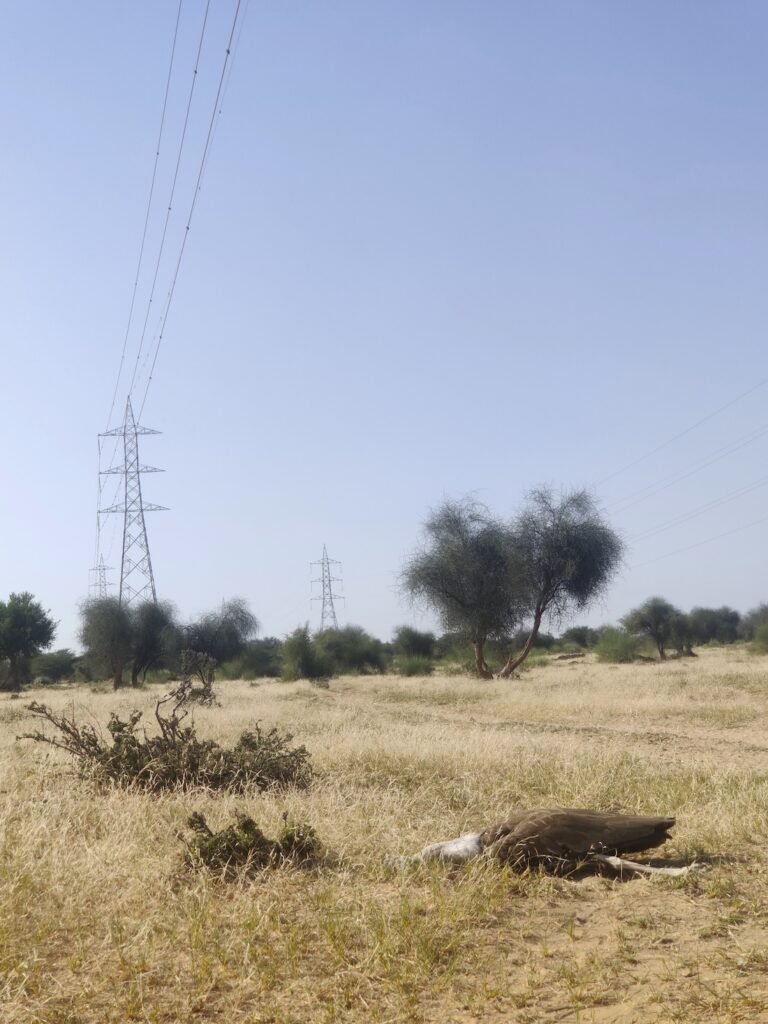
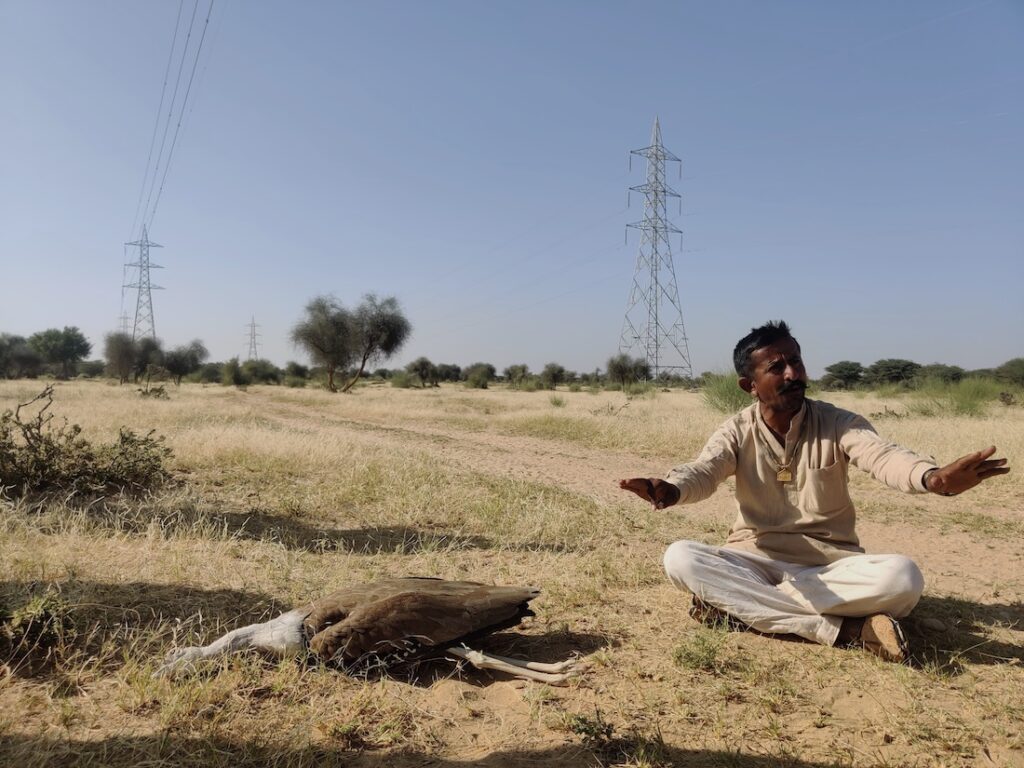
On December 18, 2025, local shepherds discovered the lifeless body of a tilor (MacQueen’s bustard) close to a high-tension power line near the Ramdevra village in Rajasthan’s Jaisalmer District. Upon receiving the news, Dharmendra Pooniya Bishnoi, a wildlife enthusiast from the area, arrived at the spot to inspect the cause of death. Once there, he understood that the bird had died upon colliding with the high-tension power line that ran above. Soon, the local forest department staff arrived at the area and carried away the body of the bird to the veterinary hospital in Pokhran for post-mortem analysis. A tag on the bird’s leg (number M25N014585 ABUDHABI) indicated that the bird arrived from Abu Dhabi, one of the Emirates of the United Arab Emirates (UAE).
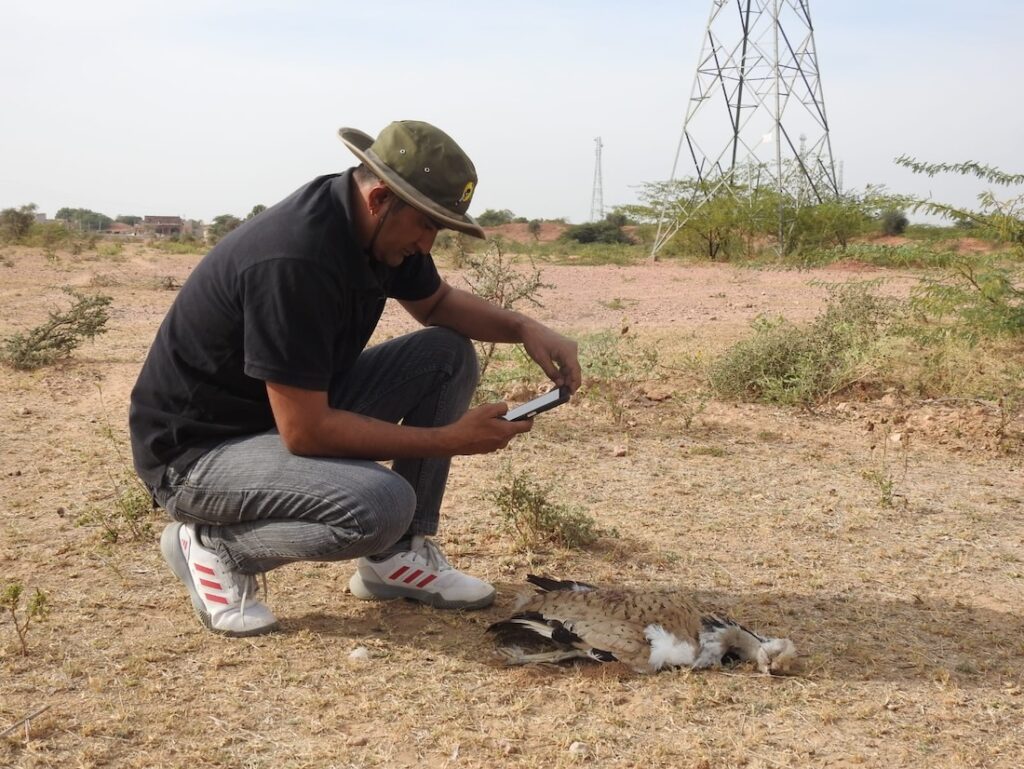
This incident was not an isolated or a rare event. In November 2019, Dr. Sujit Narwade, Deputy Director of BNHS and Coordinator of the Bustard and Florican program, documented a similar distressing situation involving a MacQueen’s bustard in Khetolai, a small village near the town of Pokhran in the Jaisalmer District. Here, too, the bird had died upon colliding with a power line.
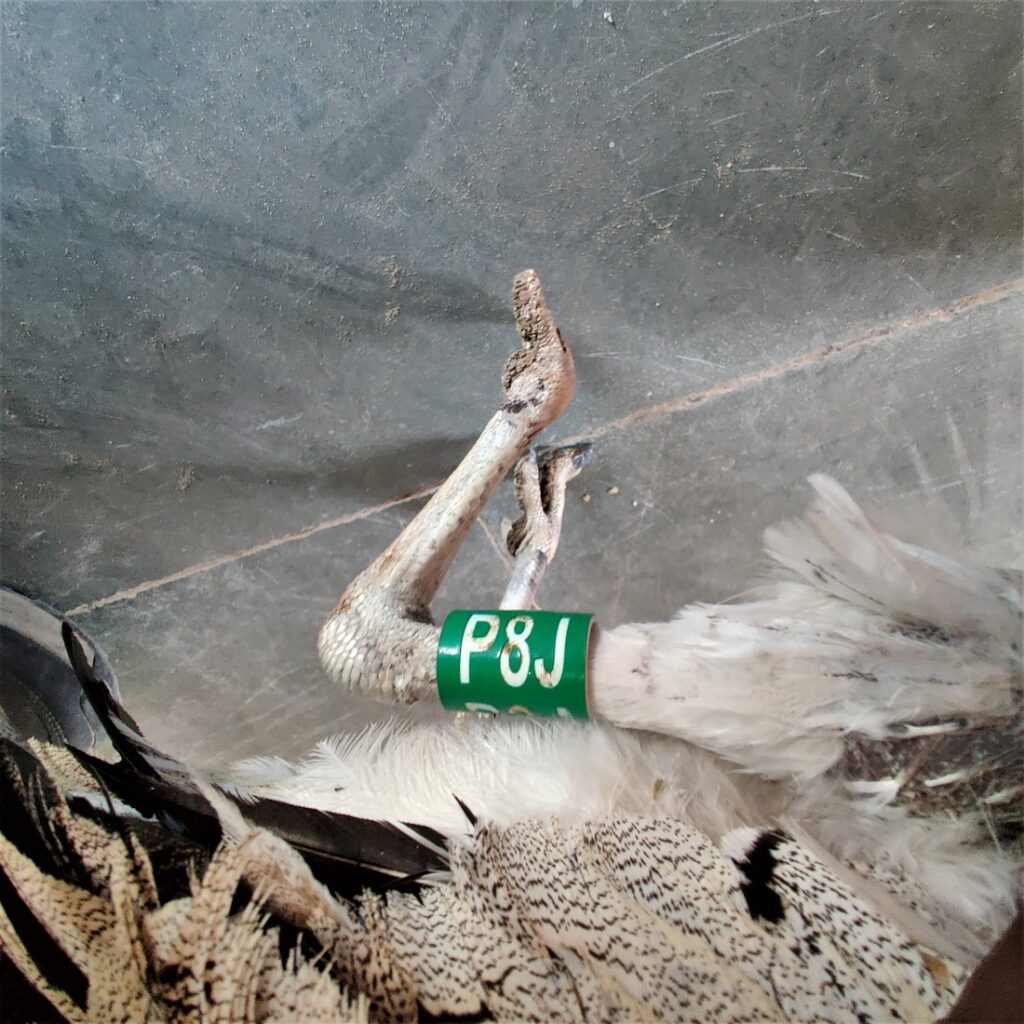
Subsequently, during extensive surveys conducted across India and Pakistan, an injured MacQueen’s bustard was discovered by Border Security Force (BSF) personnel on November 22, 2021. The bird was wearing a distinctive tag marked M21S IFHC/NARC POB10000. Recognizing the urgency of the situation, the BSF provided detailed information on the injured bustard to the BNHS. In response, a team from BNHS conducted an assessment of the bird. However, despite their efforts, it died three days later. The cause was the same.
Every year, hundreds of birds suffer tragic deaths in Rajasthan’s Thar Desert on coming into contact with the lethal network of high-tension power lines criss-crossing the desert landscape. Death occurs due to collision or electrocution. Bustards like the Great Indian bustards (GIBs) and the MacQueen’s bustards are especially vulnerable to such accidents. With their eyes positioned on either side of the head, these birds lack good frontal vision, which makes it difficult for them to detect power lines in their flight path. Often, by the time they see the obstruction, it is too late. They are heavy-bodied birds that are unable to swiftly manoeuvre direction to avoid collision. The physical force of the impact usually kills or grievously injures them.
About The GIB And MacQueen’s Bustards
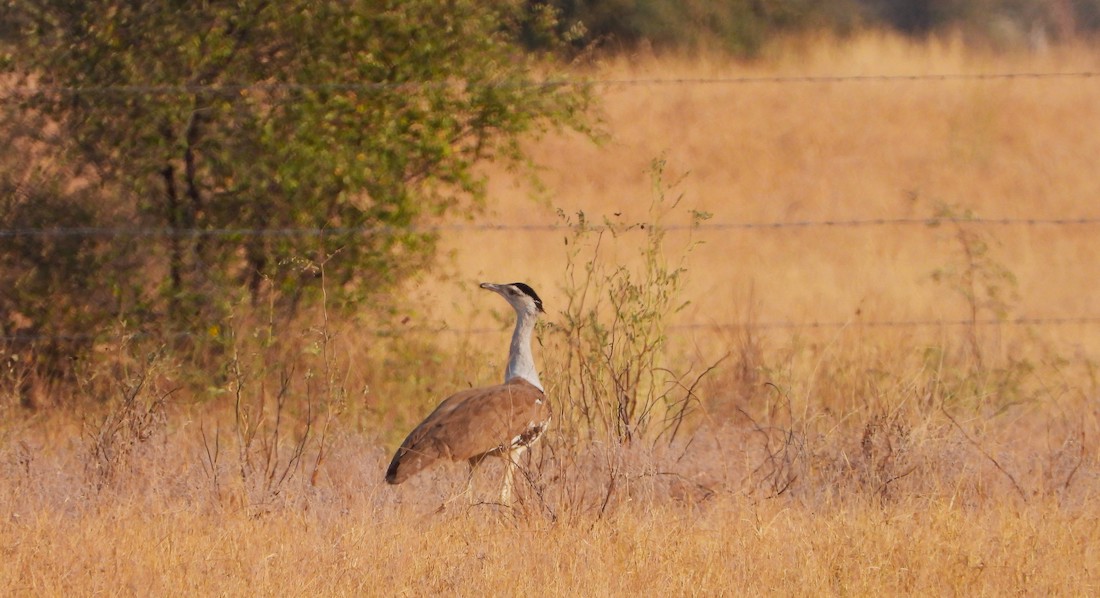
The GIB (Ardeotis nigriceps) is listed as Critically Endangered, and the MacQueen’s bustard (Chlamydotis macqueenii), also known as the Asian houbara, is designated as Vulnerable on the IUCN Red List. The former is a resident bird in parts of the Indian subcontinent, while the latter has a wider distribution, ranging from Egypt to the Arabian Peninsula, Central Asia, South Asia, Mongolia, and China. These birds are generally found in arid and semi-arid grasslands and shrublands in their range. They are mainly ground-dwelling and ground-nesting birds. They lack the rear toe that is needed to perch on trees or other supports. This adaptation makes these bustards and their chicks extremely vulnerable to a multitude of threats.
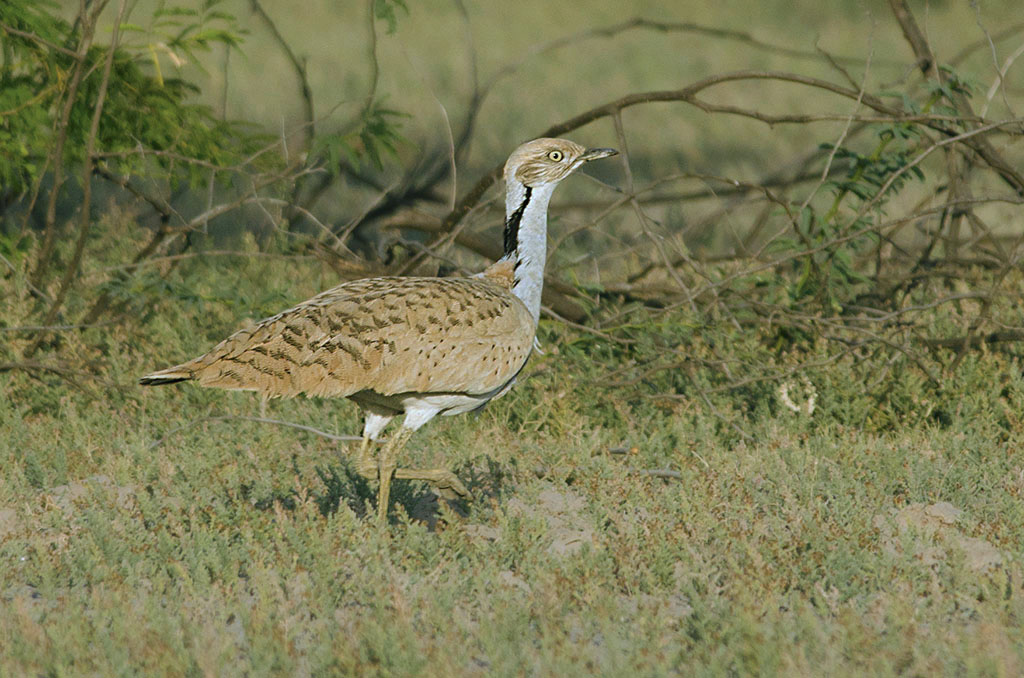

In India, the MacQueen’s bustards are observed primarily during winter when they arrive as migrants in parts of Western India, including the Thar grasslands in Rajasthan and the Little Rann of Kutch in Gujarat.
Threats To These Birds
The path of this visitor to India is riddled with challenges. Across its range, it is extensively hunted as a prey species in falconry. The hunting is often indiscriminate and unregulated. Although the MacQueen’s bustard is captively bred in the UAE and released into the wild, experts estimate that the restocking of the population is not enough to account for the loss. The meat of the bird is also used in traditional medicine, and hence, it is a highly sought-after catch for many.
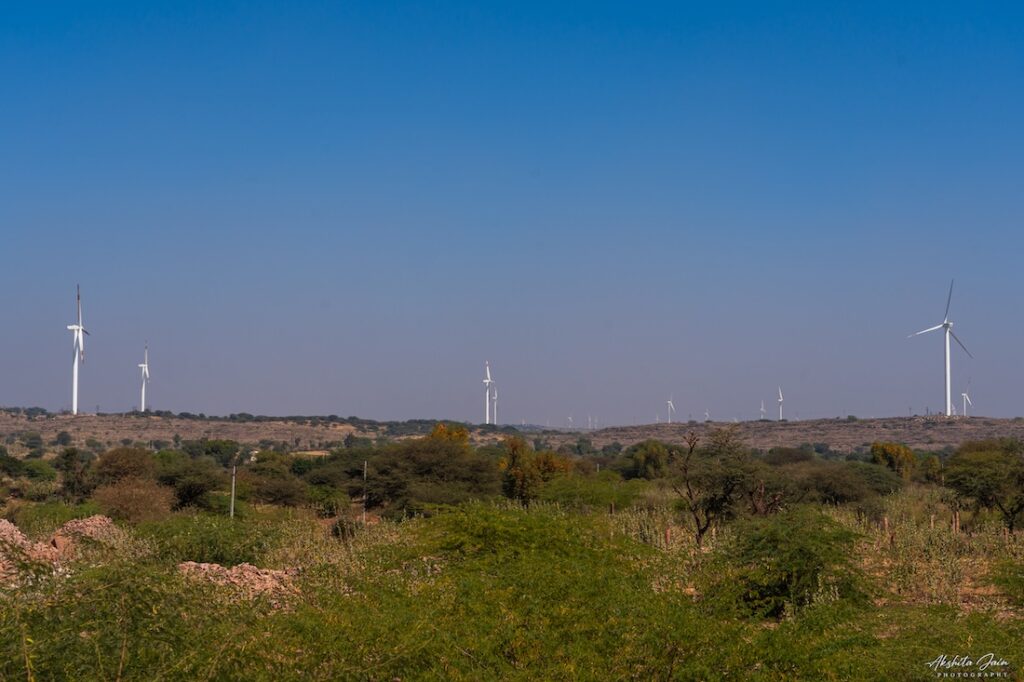
While hunting was a major cause of the decline in GIB numbers in the past, habitat loss and fragmentation are the current biggest threats to the species. Only around 100 to 150 mature individuals of the species remain in the wild. Roads, railways, power lines, renewable energy plants such as solar panels and wind turbines, overgrazing by cattle, and the conversion of wild habitats to human settlements and croplands are all factors that facilitate GIB declines. The MacQueen’s bustard also faces similar issues across its range.
Power Line Threats – Jurisdiction And Mitigation
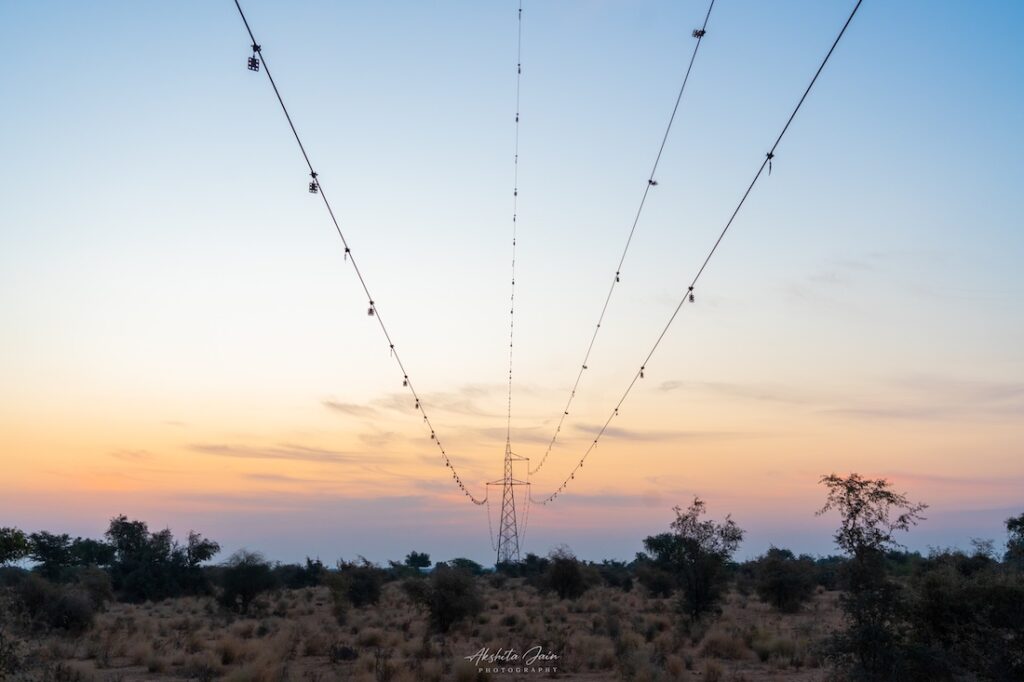
Power line threats are among the most mitigable threats to these birds. Rerouting lines and undergrounding them to keep critical bird habitats free of this threat is the best way to avoid bird deaths related to power line installations.
The issue is of such importance that the Supreme Court of India has passed several judgments on the subject, with the most recent one lauded by bustard conservationists.
In 2021, the court passed a judgment prohibiting the installation of new overhead power lines in a 99,000 sq km area that was part of the birds’ habitat. It also recommended the use of bird diverters and the setting of a committee to assess the installation of underground power lines.
However, in 2024, concerns raised by the power and energy sectors led the Supreme Court to modify its previous order, which had banned overhead power lines, and made it less stringent.
The 2025 court judgment on the same issue was well-structured, with three main directives. The extent of the priority areas, which are critical habitats for the GIBs, was to be revised and clearly demarcated by the concerned authorities. No new overhead power lines would be allowed in such areas, and existing ones were to be rerouted or placed underground. Power line corridors separate from the priority areas were to be identified and demarcated to install new power lines. The court also displayed strictness towards the installation of wind turbines and solar power plants in the identified priority areas for the birds.
“The seasonal arrival of MacQueen’s Bustards in Rajasthan’s Thar Desert and Gujarat’s Little Rann of Kutch underscores the urgent need for stronger conservation efforts in India. Unlike the UAE, which actively pursues captive breeding, India must focus on protecting natural habitats and addressing threats like power lines, habitat fragmentation, and unregulated development. With the Great Indian Bustard on the brink of extinction and MacQueen’s Bustard facing significant pressures, India’s strategy should prioritise habitat protection, enforce hunting bans, and plan infrastructure to minimise bird collisions. Safeguarding these grasslands and ensuring safe migration routes are essential for the survival of these vulnerable species,” stated Dr. Sujit Narwade.
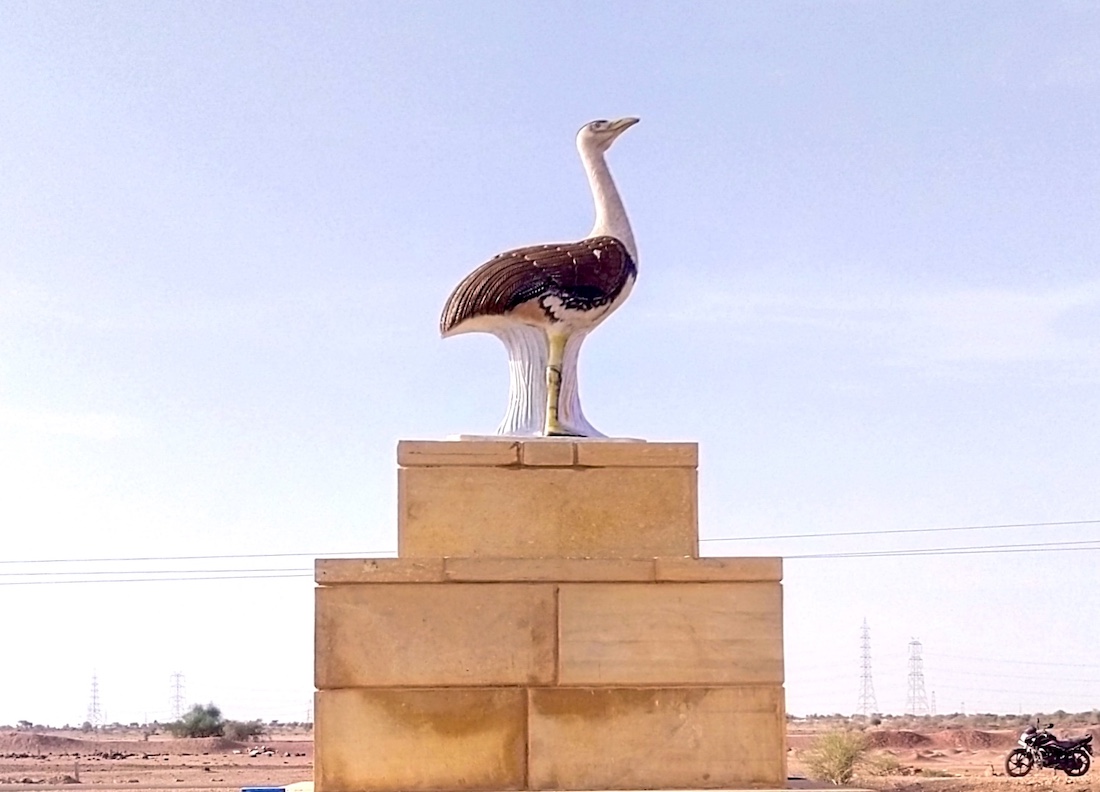
The GIB has little time left, while the MacQueen’s bustard is on its unfortunate way to becoming rarer by the day. At such times, each individual’s life matters when numbers are so low. Power line threat mitigation is one way to save the lives of the precious feathered residents and visitors of India.
Migratory birds die tragically every day due to high tension line electricity near our village.