

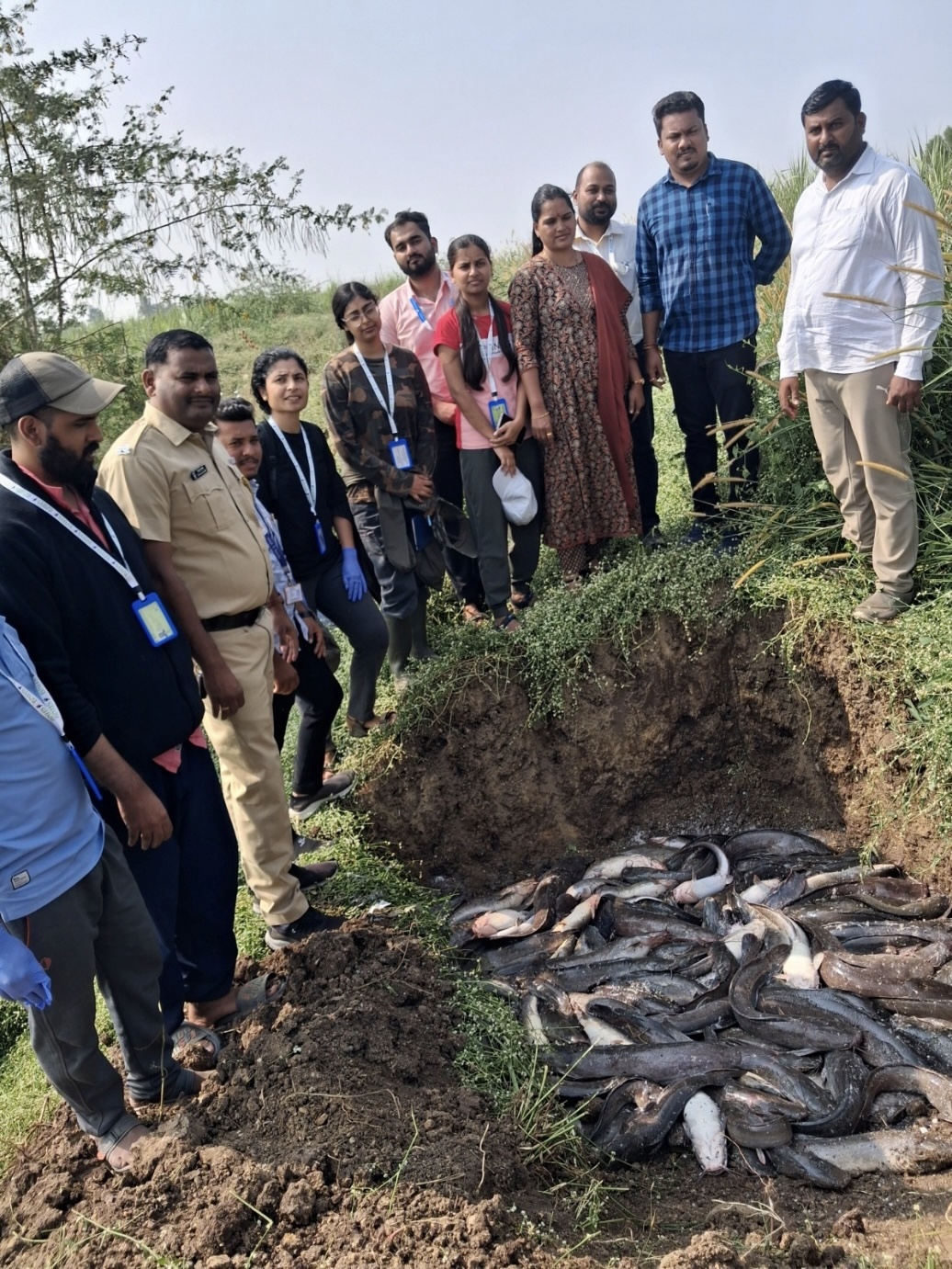
The African catfish (Clarias gariepinus), an alien and globally recognised invasive species originally native to Africa, has become a subject of concern in India due to its illegal introduction and widespread proliferation in local water bodies. The species was smuggled from neighbouring Bangladesh by private fish traders in the late 1980s/early 1990s, primarily for aquaculture due to its rapid growth and tolerance for poor water quality. Initial farming took place in West Bengal, Assam, and Andhra Pradesh before spreading across India.
According to official reports, recent enforcement actions have resulted in the seizure of substantial quantities of African catfish; for instance, approximately 2.4 tonnes were confiscated from the Ujani reservoir in Maharashtra in 2024 (Hindustan Times, 2025). Despite a national ban, the species continues to be illegally farmed and distributed, posing significant ecological and public health challenges.
Feature image description: Maharashtra Fisheries Department officials (led by Mrs. Archana Shinde, Assistant Commissioner of Fisheries) seized 2.4 tons of African catfish from Ujani, Pune. BNHS (Dr. Unmesh Katwate and his team) assisted with species identification and water quality assessment to evaluate the impact of these illegal aquaculture practices on Ujani wetland.
Ecological Impact: Biodiversity And Ecosystem Disruption
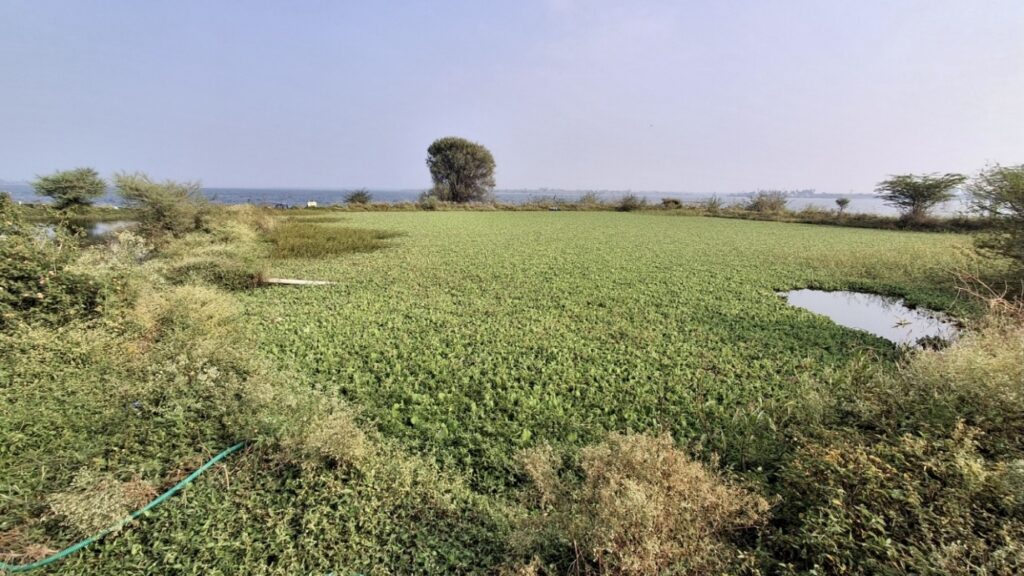
Invasive vegetation proliferation resulting from wastewater discharge originating from unregulated African catfish aquaculture operations, Ujani Reservoir.
The extraordinary adaptability and reproductive capacity of Clarias gariepinus allow it to outcompete native species and disrupt local ecosystems. Many native freshwater fish species, including the iconic mahseer, in India have been reported to be extirpated in the rivers infested with African catfish. Its high fecundity, rapid growth, and tolerance to diverse environmental conditions make it an aggressive invader. Scientific observations confirm that African catfish are opportunistic predators, feeding on native fish, fish eggs, amphibians, reptiles, and even birds, thereby reducing biodiversity and destabilising food webs. The introduction of African catfish has also been linked to the spread of novel parasites and pathogens, resulting in disease outbreaks and mass mortality among indigenous fish populations.
Health Risks: Unregulated Aquaculture Practices
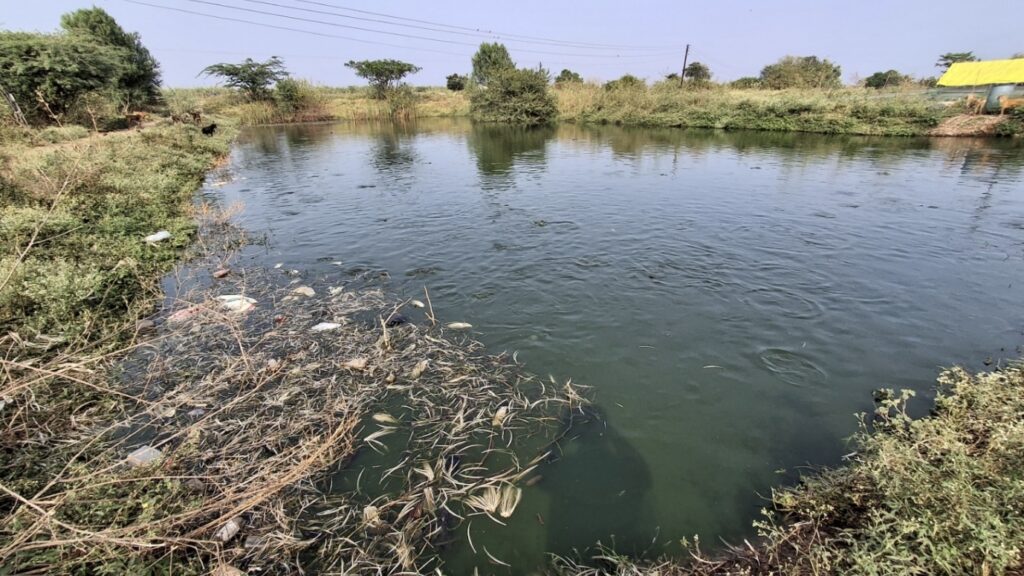
Unregulated and illegal African catfish farms in the backwaters of Ujani Reservoir, one of Important Bird Area (IBA) delineated by BNHS.
The health risks associated with African catfish stem primarily from unsanitary aquaculture practices. Scientific analyses reveal that illegal farms often use contaminated animal waste and slaughterhouse by-products as feed, leading to the accumulation of heavy metals such as lead, aluminium, and iron in the fish’s tissues. Consumption of these contaminated catfish can result in adverse health effects, including heavy metal poisoning, as documented in several case studies. Moreover, the species’ resilience in poor water conditions encourages unhygienic culture methods, increasing the risk of pathogen transmission through the food chain. Effluent and metabolic waste from African catfish farms contribute to water pollution, excessive nutrient enrichment leading to massive growth of invasive plant species such as Water hyacinth, and elevated ammonia levels, further endangering public health and aquatic life.
Legal And Regulatory Status: Enforcement Actions And Institutional Roles
Recognising the ecological and health threats posed by Clarias gariepinus, the Government of India has banned its culture and trade under the Environment Protection Act, 1986, and subsequent notifications (Ministry of Environment, Forest and Climate Change, 2017). The National Green Tribunal (NGT) has reinforced this ban through an order in January 2019 (Order No. 435/2018 dated January 22, 2019). In India, enforcement of African catfish regulations involves state and district Fisheries Departments, District Collectors, and local agencies acting under NGT directives. These authorities inspect aquaculture operations, confiscate illegal stocks, and file violation reports, with support from scientific institutions like BNHS, NGOs, and citizens. For example, the Maharashtra Fisheries Department, in collaboration with BNHS, regularly seizes and disposes of illegal African catfish. Such coordinated efforts are crucial to controlling this invasive species and protecting native biodiversity and public health.
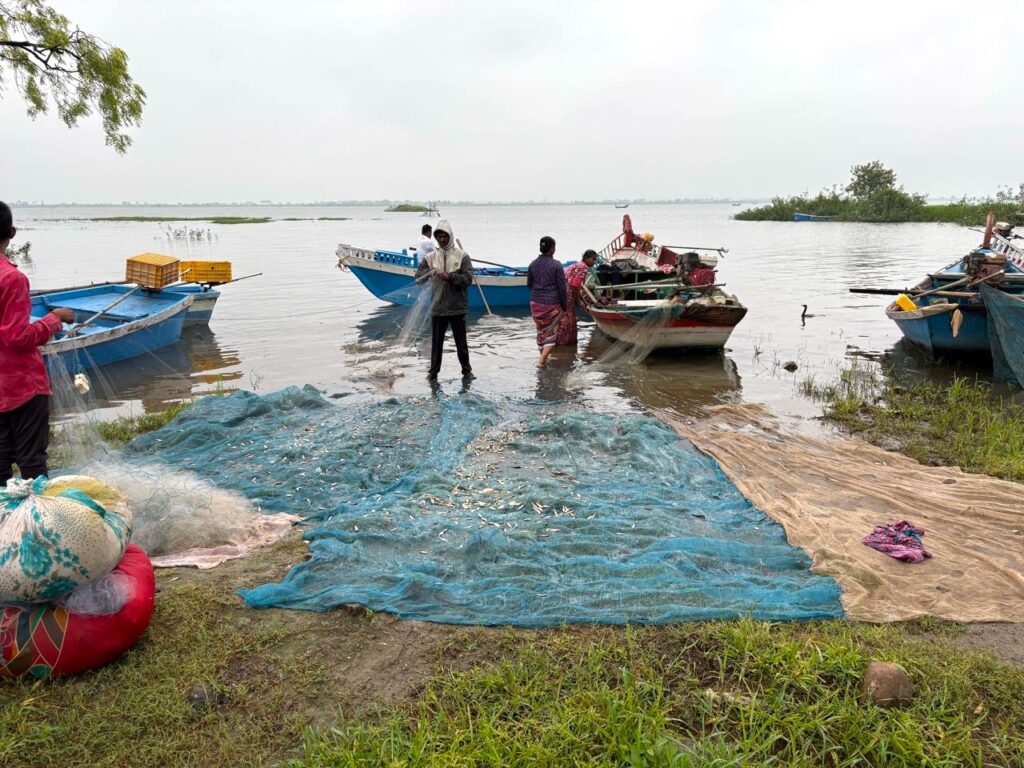
BNHS, through its Wetland Eco-Restoration and Fisheries Development Program, is carrying out extensive Invasive Alien Species (IAS) removal activities in Ujani Reservoir. The removal of African catfish by involving local communities, educating people/ stakeholders to stop illegal farming and providing farm owners with alternatives to these invasive catfish are the activities being extensively carried out by BNHS.
BNHS Initiatives: Wetland Eco-Restoration And Fisheries Development Program
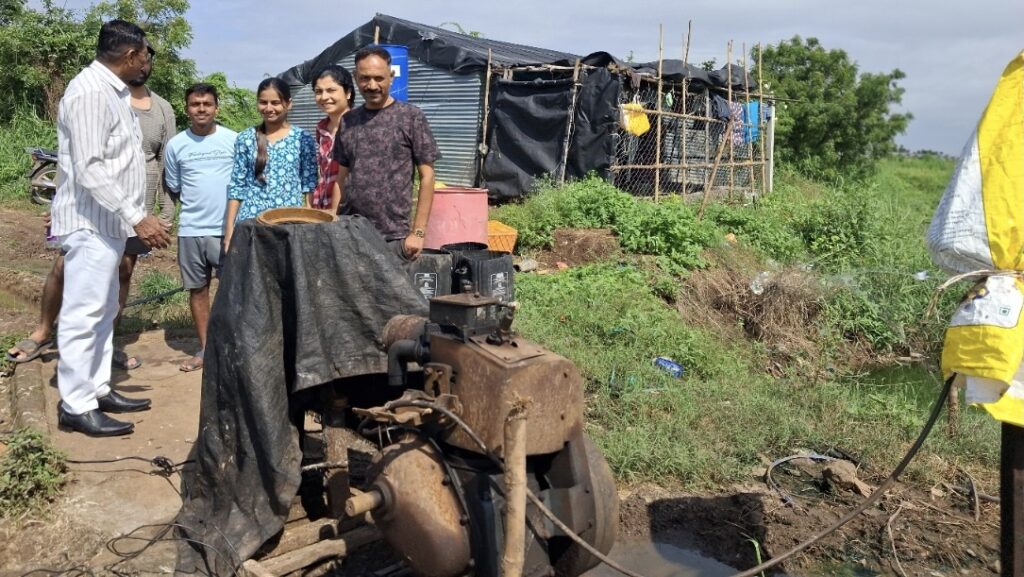
BNHS team, in the presence of local fishermen community representatives, inspects the mechanical crushers utilised by farm owners for processing chicken waste, which is subsequently used as feed for African catfish.
The Bombay Natural History Society (BNHS), through its Wetland Eco-Restoration and Fisheries Development Programme, has been at the forefront of addressing the issue of invasive African catfish in the Ujani Reservoir. As part of its extensive activities, BNHS undertakes rigorous removal of Invasive Alien Species (IAS), with a particular focus on African catfish, which have been identified as a significant ecological threat in the region.
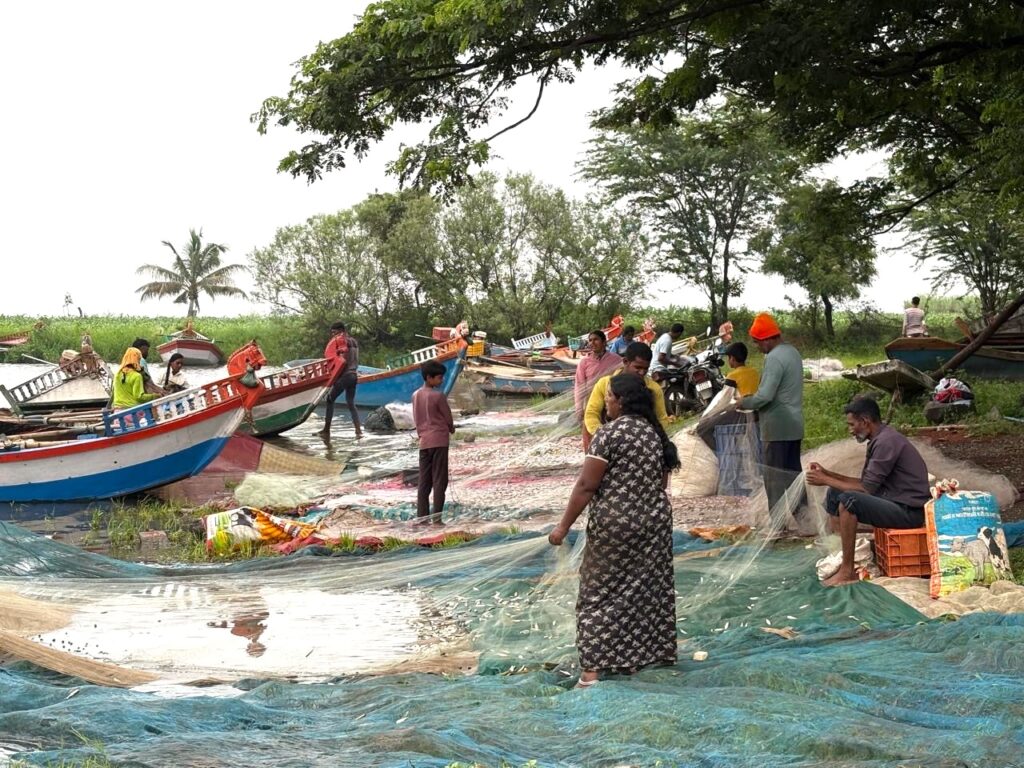
A key component of BNHS’s strategy involves the active participation of local communities. By engaging residents and stakeholders, BNHS not only facilitates the physical removal of invasive catfish from the reservoir but also fosters a sense of ownership and responsibility towards preserving native fish biodiversity. Community members are educated about the adverse impacts of illegal African catfish farming, with the aim of curbing such practices at the grassroots level.
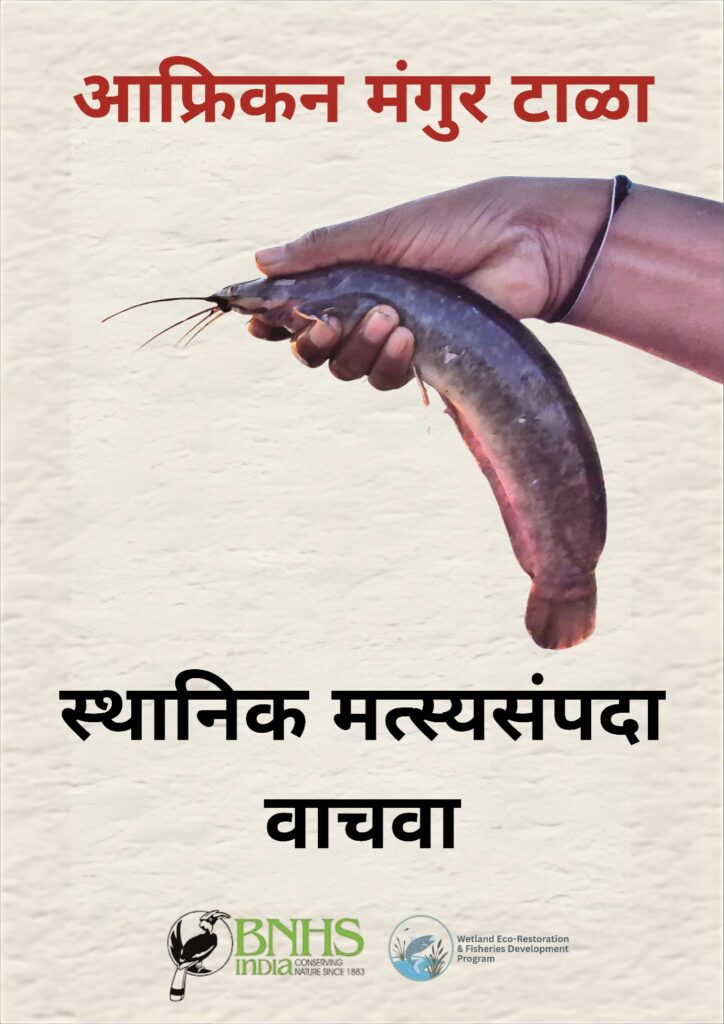
Educational material prepared and distributed by BNHS to create awareness among local fishing communities to stop African catfish farming.
In addition to awareness and outreach, BNHS provides sustainable alternatives to farm owners who have been dependent on farming invasive catfish. This multifaceted approach—combining invasive species removal, community education, and livelihood diversification—aims to achieve long-term ecological restoration and reduce the recurrence of illegal aquaculture activities in the Ujani Reservoir.
Key Findings And Recommendations
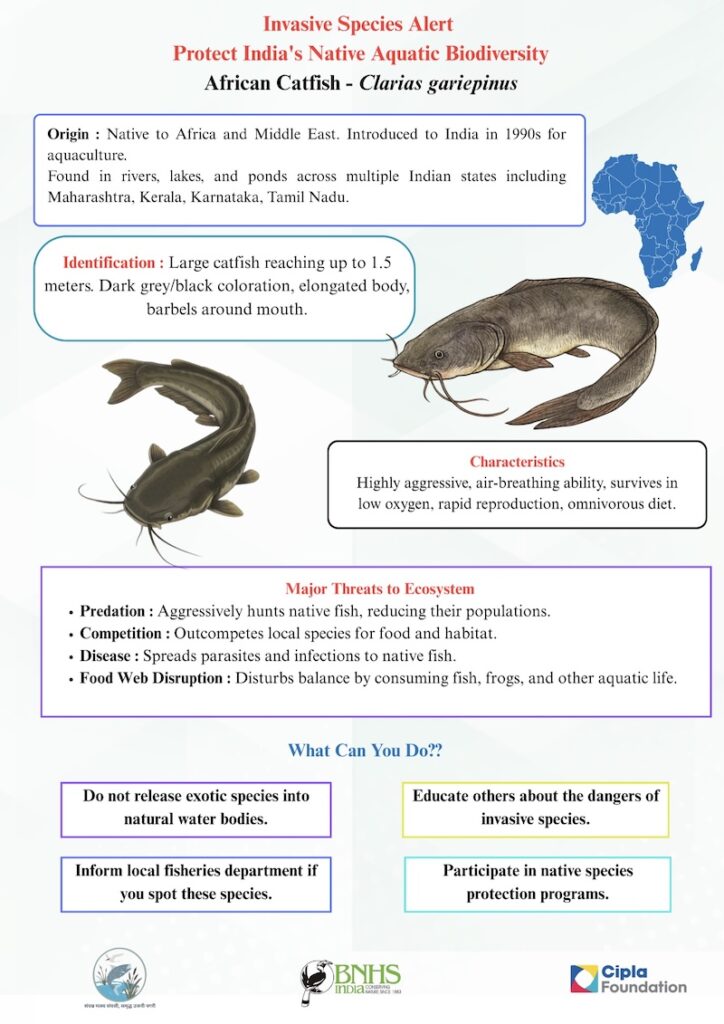
The invasion of African catfish in India poses a multi-dimensional threat to native biodiversity, ecosystem health, and public safety. Scientific research unequivocally demonstrates the species’ destructive ecological impact and the significant health risks associated with its consumption. Legal measures, backed by authoritative sources, remain crucial for controlling its spread. Enforcement agencies (including the state fisheries department) continue to seize illegally farmed stocks and prosecute offenders to prevent further spread of this invasive species. It is imperative for policymakers, fisheries biologists, environmentalists, and citizens to remain vigilant, support regulatory actions, and promote awareness about the consequences of invasive alien species.