

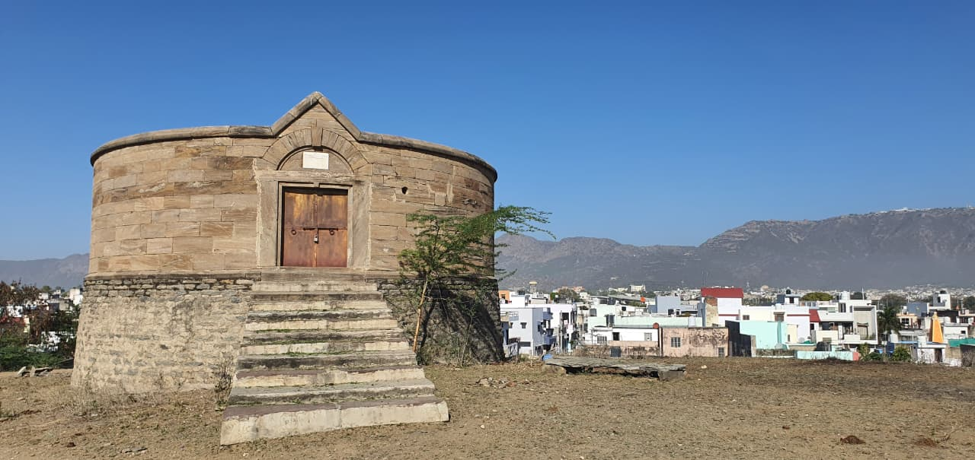
The structure of Dokhmenashini or Dakhma was constructed in the 19th century with strict compliance with guidelines mentioned in the Vendidad of Avesta (foundational legal and ritual code of Zoroastrianism) in Ajmer
Vultures are the most efficient carrion feeders which helps in reducing the dead animals in the matter of a few hours thus minimizing the spread of diseases due to rotting carcasses. They may seem less appealing to the eyes of some people who do not feign from mentioning them as ugly birds in various literature and books but in reality they are the most clean species of the animal kingdom.
In the years ranging near 1950-60 birds of carrion belonging to the Accipitridae family which comprises old-world vultures were a sight to behold for anyone who loved nature. Their remarkably keen sense of eye-sight makes them efficient for seeking the dead bodies from a great distance. This also differentiates them from the new-world vultures which belong to the family of Cathartidae because new-world vultures often called Condors have a keen sense of smell which is a rare trait in birds.
The Indian sub-continent being a part of the old world hosts 9 species of vultures out of which 6 species are resident while 3 are migratory which means they travel to India during certain seasons.
Out of these 9 species; Rajasthan hosts 7 species of vultures: Indian vulture, White-backed vulture, Red-headed vulture, and Egyptian vulture, and winter visitors like the Himalayan griffon, Eurasian griffon, and Cinereous vulture.
Ajmer being situated at the heart of Rajasthan also had a significant number of vultures which not only aided the fast consumption of carrions but also played a significant role for the Parsi funeral practice of excarnation called Dokhmenashini/Dhakma. The belief of this practice arises from two reasons, where one belief is rooted in Zoroastrian belief that fire, earth and water are sacred and must not be polluted by the decaying body. The other one emphasizes that even after a person has died, they must be of service to other animals, a good deed done even after death.
Farshid Fatakia, Chief Operating Officer, Bombay Natural History Society who is also the head priest of the Fire Temple of Zoroastrians quotes; “It’s also important to note that for Zoroastrians, this practice is not about vultures. It is about returning the body to nature. In our belief, we do not own our bodies; they are borrowed from nature. Throughout life we take from the earth, and in death we give ourselves back to it. By choosing exposure, we avoid polluting the sacred elements of earth, fire, and water. The vultures, as nature’s scavengers, simply complete the cycle. Interestingly, Tibetan monks follow a very similar tradition of sky burial, rooted in the same understanding that we are part of nature, not separate from it.” The Tibetan Buddhists believe that death is a transitional phase in the cycle of life. Their funeral practice of sky burial is termed ‘jhator’ in their regional dialect and it translates to ‘giving alms to the birds’. The region designated to carry out the sky burial is on a high surface of a mountain and is called Charnelgrounds where the priest chants mantras to invite the scavengers to come and initiate the ritual process. Himalayan Vultures are the key scavenger species which aids in this process.
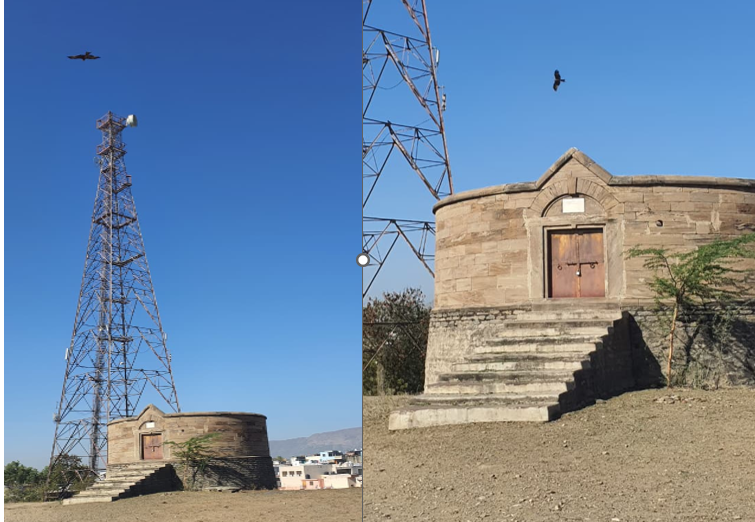
Key architectural features of Dhakma includes:
Consecration Grid (Tāno): Built over a network of 301 steel/iron nails connected with cotton thread (kusti) during the founding ritual to isolate the ritual precinct from worldly impurities.“I remember the time when we were walking towards our college and whenever we saw a carcass of a cattle or any stray animal lying on the way, in the matter of two three hours it would be reduced to a mere pile of skeletal remains.” states Prof. Adarbad Motafram (retired professor of Geography and head priest of Parsi Fire Temple) recollected the time while he was studying in college in the late 1960s. “We would watch 3-4 vultures of massive build with dark featherless dark head and slender hooked beak feeding on the carcasses accompanied by a few crows and often being interrupted by dogs.”
Elevation and isolation: Dhakmas are constructed on elevated and dry ground outside residential centers to maximize sunlight and wind exposure while avoiding public view.
Pavis: The central structure of Dhakma is divided into concentric pavement rings (Pavis): Outer Ring: Dedicated to adult males. Middle Ring: Dedicated to adult females. Inner Ring: Dedicated to children.
Central Ossuary Pit (Bhandar): A deep central well lined with non-porous stone, sand, lime, and charcoal filters where sun-bleached bones fall, preventing biological contamination of the surrounding soil.
Prof. Motafram explained that “The funeral rituals for the deceased in any religion is often correlated with the geographical conditions of the area where these religions originated or practised.” Zoroastrian religion originated in ancient Persia (modern day Iran) in the northeastern region where the terrain was rugged with primarily arid geographical landscape dominated by high mountain rims surrounding a massive desolate central plateau while the Tibetan region also has rugged mountainous terrain and high plateaus. Both plateaus sit where major continental plates crash into; Eurasia—Arabia pushes into Iran, and India pushes into Tibet. The atmosphere and surroundings also supported the tradition as the ground was hard and rocky for ground burial and low availability of timber in these regions made it difficult for cremation. These rituals originated out of the perfect convergence of harsh geographical necessity and profound religious philosophies without causing any harm to the environement.
Iran has been home to several species of old world vultures like Eurasian Griffon Vulture, Cinereous (Black) Vulture, Egyptian Vulture and Bearded Vulture. The Tibetan plateau hosts the population of Himalayan Vultures, Bearded Vulture and Cinereous Vulture. Vultures have been very important species in keeping the environment clean. They are nature’s clean up crew which can get rid of dangerous germs from spreading diseases. The strong acids in their stomach can kill pathogens like Anthrax and Cholera before they can spread and cause harm.
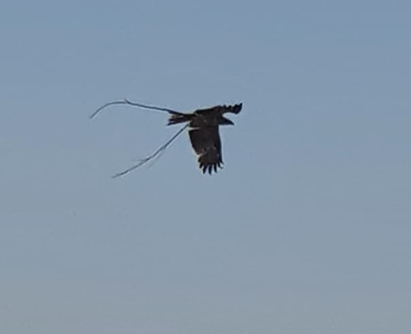
Parsi families migrated to India from Iran around 1200 years back. Parsi families have been living in Ajmer since the 1880s,their number has gone down drastically from 100 families at one time to only about 8 to 10 families. At present only 5 Parsi families are residing in Ajmer as explained by Prof. Motafram who is also the caretaker of the Parsi Fire Temple. Their tradition of Dokhmenashini now depends on other scavengers like House Crows and sometimes Black Kites because in the present scenario there seem to be no vultures in the city of Ajmer. In the year 2005, 13 Long Billed Vultures and 14 Egyptian Vultures were last sighted by Dr. A.K. Changani after which there are no proper records of the sighting of this majestic bird. There have been recent records of injured and fatigued Indian Vulture (Pisangan village, 2025) and Himalayan Griffon (from Ladpura village, 2026) being sighted near the agricultural fields in Ajmer region rescued by Rajasthan Forest Department. There are no records of nesting populations from the city and the surrounding areas. There has been occasional sighting of Egyptian Vulture in Shokliya region with the most recent photographic record in January 2021.
Vultures serve as the essential agent in this process, fulfilling both a theological requirement and an ecological purpose. The decline in vulture population started from the mid-1960s and this decline escalated in the 1990s when 90% of their population vanished from the map of India.
Diclofenac is mostly sighted as the “evil drug” as a report published by Ministry of Environment and forests (Government of India) but in the small town of Rajasthan (India) Prof. Motafram believes that rapid deforestation, especially cutting down of large branched and leafless trees which harboured these vultures as well as different methods adopted to dispose of carcasses are the major reasons which escalated the total disappearance of the vulture population from across the city.
The Dakhma (Tower of Silence) which was once visited by 10-12 Vultures (as mentioned by community members of Parsi religion) now lay devoid of these primary carcass feeders in Ajmer (Rajasthan) with only the aid of Crows and occasionally Black Kites to fulfil the task.
The Author Akansha Verma Saxena is an educator & naturalist from Ajmer and life member of the BNHS.